
Renting a car for the first time in an unfamiliar place can feel uncertain. What documents do you need? What does the insurance actually cover? What happens if something goes wrong? And is there anything about driving in Curaçao specifically that you should know before you get behind the wheel?
This guide answers all of it — plainly, honestly, and without the small print.
Why You Need a Car in Curaçao
Let’s start here, because it’s worth saying clearly: Curaçao is one of those islands where a rental car genuinely transforms the experience.
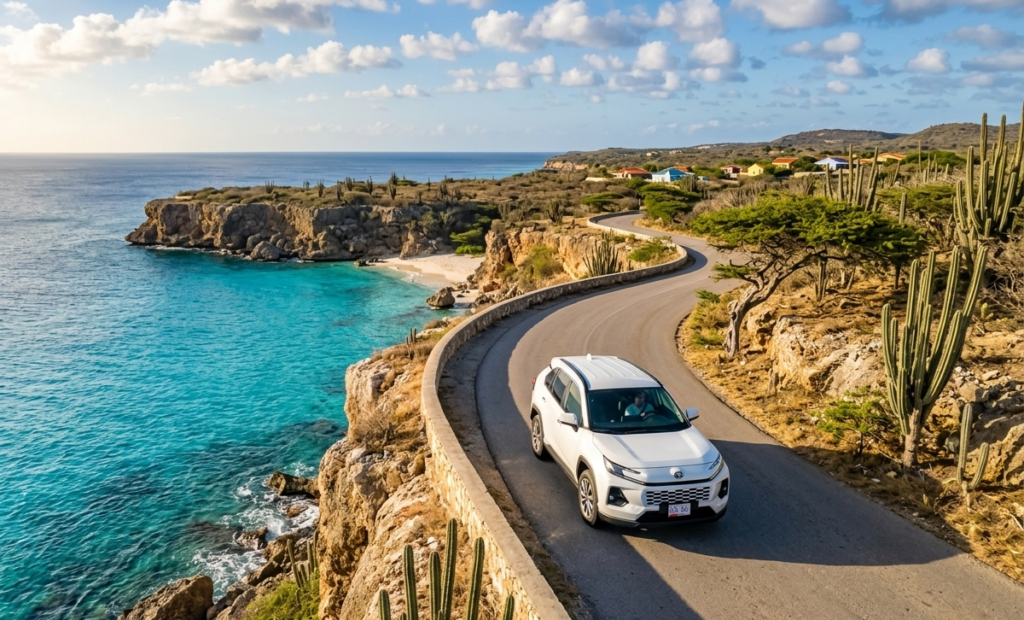
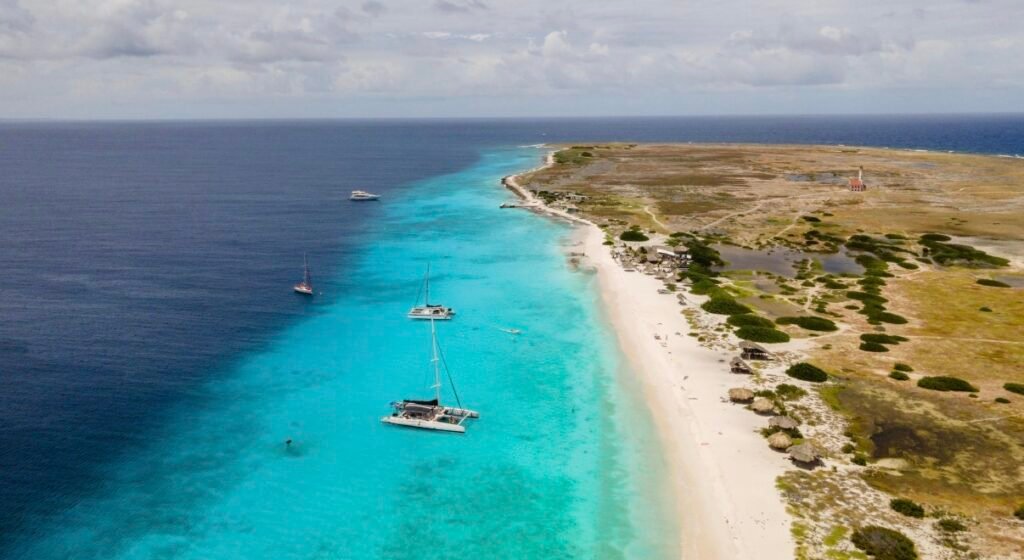
Public transport exists but is limited to a handful of bus routes concentrated around Willemstad. Taxis work well for short city trips but become expensive quickly if you’re visiting multiple spots in a day. And the places most worth visiting — Knip Beach, Cas Abao, Christoffel National Park, Shete Boka, Westpunt — are spread across the island and require your own wheels to reach comfortably.
With a car, you stop when you want to, stay as long as you like, take the scenic detour, and discover the places that don’t appear on organised tours. Without one, you’re dependent on schedules and taxi fares that add up fast.
A rental car in Curaçao isn’t a luxury. It’s the difference between seeing the island and really experiencing it.
What You Need to Rent a Car
Before anything else — the requirements. These are straightforward:
Minimum age: 23 years. All drivers on the rental must meet this requirement.
Driving experience: At least 1 year. If you passed your test recently, make sure you’ve held your license for a full year before your trip.
Valid driver’s license: Your home country license is accepted in Curaçao. It must be current and valid — not expired. Bring the physical card, not a photo on your phone.
Government-issued ID: Passport or national ID card. Required at pickup alongside your license.
Payment method: A credit or debit card for the security hold if applicable, depending on the coverage you choose. With Full Coverage, no hold is required at all.
That’s it. No international driving permit required for most nationalities. No complicated paperwork. Present your documents at pickup and you’re on your way.
Understanding Insurance — The Most Important Decision
Insurance is the part of car rental that confuses people most. Here’s how it works at IslandGo, explained simply.
What happens if the car is damaged?
If the car is damaged during your rental and it isn’t covered by your plan, the cost of repairs comes out of your security hold — or is charged to your payment method. This is your financial exposure, often called your excess or liability.
The three options
Basic Coverage — Included, free Basic coverage comes with every rental at no extra charge. It includes third-party liability — meaning damage you cause to other vehicles or property is covered. However, damage to the IslandGo vehicle itself is your responsibility up to $750. A $750 security hold is placed on your card at pickup and released when the car comes back safely.
Best for: travelers who are very confident drivers, renting on a tight budget, and comfortable knowing the $750 hold is sitting on their card.
Medium Coverage — $7 per day Medium coverage reduces your financial exposure from $750 to $500. Partial damage protection is included, and the security hold drops accordingly.
Best for: travelers who want some extra protection without paying for full peace of mind.
Full Coverage — $14 per day Full Coverage is exactly what it sounds like. Zero security hold, zero deposit, zero excess. If the car is damaged, you are fully protected. Nothing is charged to your card beyond the daily rental rate.
Best for: most travelers, most trips. At $14 a day, it adds very little to the overall cost and eliminates all financial uncertainty. It’s the option most of our customers choose — and the one we’d recommend to anyone who wants to enjoy their holiday without a nagging worry in the back of their mind.
Should you use your credit card insurance instead?
Some credit cards offer rental car insurance as a benefit. In theory, this can duplicate or replace the need for additional coverage. In practice, the terms are often restrictive — many exclude certain vehicle types, require you to decline the rental company’s coverage entirely, have complicated claim processes, and don’t cover third-party liability.
If your card does offer rental insurance, read the terms carefully before relying on it. When in doubt, the Full Coverage option at $14 per day is simpler, clearer, and gives you complete certainty.
How Booking Works
IslandGo is deliberately designed to make booking as simple as possible. No lengthy online forms, no confusing options, no waiting three days for a confirmation email.
Option 1 — WhatsApp (recommended) Send us a message on WhatsApp at +599 968 27979. Tell us your dates, your preferred vehicle, and where you’d like to pick up the car. We reply within minutes, confirm availability, and send you everything you need. Done.
Option 2 — Online booking form Visit islandgocar.com/book to complete the booking through our online system. It walks you through the same steps and delivers the same result.
Payment: You pay at pickup, not before. No upfront payment is taken when you make your reservation. You simply show up with your documents, we hand over the keys, and you pay for the rental at that point.
Cancellation: Free, right up until your rental start date. Book with complete confidence — if your plans change, there’s no penalty.
Picking Up Your Car
Where: We’re based in Willemstad at Plasa Margaret Abraham. But we also deliver directly to Hato International Airport and hotels across the island. If you’d prefer the car to be waiting for you when you land or when you check in, just let us know when you book.
What to bring: Your driver’s license, your passport or ID, and the payment card you’d like to use for the security hold if applicable. That’s it.
What we do: We’ll walk you through the car, note any existing marks on the vehicle together, explain the controls, and make sure you’re comfortable before you drive away. No rushing, no conveyor-belt handover.
How long it takes: Usually 15–20 minutes from arrival to driving away.
Driving in Curaçao — What to Know
Curaçao drives on the right, the same as the United States, most of Europe, and the majority of the world. If you’re used to driving on the left — UK, Australia, Japan — you’ll need a short adjustment period, but most drivers adapt within the first hour.
Speed limits: 80 km/h on main roads outside built-up areas. 40–60 km/h in towns and residential areas. Limits are enforced and fines are the driver’s responsibility.
Road conditions: Main roads across the island are generally in good condition. A handful of beach access roads — notably Cas Abao and parts of Shete Boka — have unpaved sections. Manageable in any car, but easier in the Yaris Cross or RAV4.
Signage: Road signs follow international standards and are easy to follow. Google Maps works well across most of the island — download an offline map for the northwest where signal occasionally drops.
Fuel: Petrol stations are concentrated in and around Willemstad. If you’re planning a day on the northwest coast, fill up before you leave the city. There’s a station near Westpunt but don’t count on it being open.
Parking: Willemstad has paid parking in the centre. Beaches typically have informal car parks — some charge a small fee. Always lock the car and don’t leave valuables visible inside.
Traffic violations: Any fines incurred during the rental period are the driver’s responsibility. If a fine arrives after the rental has ended, we’ll forward it to you.
The Most Common First-Timer Mistakes
Underestimating distances. Curaçao looks small on a map. It is small — but the northwest beaches are 50+ kilometres from the airport, and the roads are not motorways. Allow realistic driving times and don’t try to squeeze too many stops into one day.
Not fuelling up before heading northwest. This comes up regularly. Fill the tank in Willemstad before heading to the beaches. Running low on fuel near Westpunt is avoidable and irritating.
Booking a car that’s too small for the luggage. The Agya is a great city car but not ideal for two large suitcases plus beach gear. If you’re travelling with luggage, go for the Yaris Sedan or above.
Leaving valuables in the car. As with anywhere in the world, don’t leave bags, cameras, or passports visible in a parked car. Lock everything in the boot or take it with you.
Forgetting to note existing damage at pickup. Always walk around the car with the rental agent before driving away and make sure any existing marks are noted on the rental agreement. Takes two minutes and protects everyone.
Which Car Is Right for You?
Travelling solo or as a couple, light luggage, mostly city and beach? → Toyota Agya ($45/day) — nimble, easy to park, perfect for two.
Couple or small group, mix of city and coast, moderate luggage? → Toyota Yaris Sedan ($55/day) — more boot space, more comfortable on longer drives.
Family or group of friends, some off-road beach roads, more luggage? → Toyota Yaris Cross ($65/day) — elevated ride height, roof rails, the sweet spot between comfort and capability.
Family with lots of luggage, want the best, planning a full island exploration? → Toyota RAV4 ($75/day) — the all-new 2026 generation, most space, most comfort, most presence on the road.
All four come with automatic transmission, air conditioning, and unlimited mileage as standard.
Quick Reference Checklist
Before your trip:
- ✅ Valid driver’s license (not expired)
- ✅ Passport or government ID
- ✅ Held license for at least 1 year
- ✅ Age 23 or over
- ✅ Booking confirmed via WhatsApp or online
At pickup:
- ✅ Bring both documents
- ✅ Walk around the car together and note any existing marks
- ✅ Check fuel level is noted on agreement
- ✅ Save our WhatsApp number in your phone
On the road:
- ✅ Fuel up in Willemstad before heading northwest
- ✅ Download Google Maps offline
- ✅ Carry cash for beach entrances and local restaurants
- ✅ Drive on the right
Ready to Book?
Now you know everything there is to know. The only thing left to do is pick your dates and choose your car.
Send us a message on WhatsApp and we’ll have you sorted in minutes — no upfront payment, free cancellation, and a brand-new 2026 Toyota waiting for you when you land.